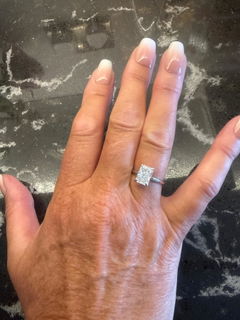
The statement piece
Subtle was never the point.
Larger carat weights and exceptional diamond lines, set on our own bench.
Talk to a jeweller
Ask about this piece, or help you choose.
WhatsApp the workshop A reply lands on your phoneLondon's Hatton Garden jewelers, now serving customers across the United States. We hold over 200 tennis chains in stock in Hatton Garden, in lab-grown and natural diamonds, 9K and 18K gold and platinum. We are a leading name in tennis jewelry because of our expert diamond sourcing and pioneering design: our parent company, BuyFineDiamonds, was one of the first to pioneer tennis jewelry in Hatton Garden, and an industry-leading team crafts each piece. We are also a leading UK specialist in men's tennis chains, selling over 500 a year in every size, length, metal and design. Any design, length or size, carat weight and metal (9K, 10K, 14K, 18K or platinum) can be made to order and delivered in about three to four weeks.
We ship to the United States, typically in 3–4 weeks, and our team helps you navigate import duties and taxes.
Made after you order, to fit you — not pulled from a warehouse shelf.
Order in the next a few hours and your necklace will be on your neck by Monday 02 November.
Need earlier? We hold far more in stock than we list as ready to ship. Tell us your shape, size and budget on WhatsApp and we'll tell you what can dispatch within 1–3 working days.
The statement piece
Larger carat weights and exceptional diamond lines, set on our own bench.
The diamond line
Compare diamond lines and lengths in our Hatton Garden showroom.
Diamond tennis necklaces
D/VVS lab-grown diamonds, graded and set in solid 9K gold. From £2,899.
Every stone graded
Every stone graded for colour and clarity, so the line reads as one.
Need a hand?
Tell us the neckline and the occasion. We will tell you the length.
Ready when you are
Selected diamond lines dispatch within 1–3 working days.
Why Amada
Every stone placed on our own bench, not bought in finished.
Most loved
Our most-wanted diamond lines and everyday chains.
Two tennis necklaces can both be called ten carats and look nothing alike. One carries 100 small stones that read as a fine, liquid line. The other carries 40 larger stones that sit like jewels. This guide covers women's and men's chains and explains the choices that change how a necklace looks and wears, so that you compare pieces on what you will see in the mirror rather than on one headline number.
Every necklace on this page is listed with its metal, total carat weight and diamond quality. Where a piece is sold with a laboratory report, the report is named on its product page.
Total carat weight (ctw) is the sum of every diamond in the necklace. The width of each stone is what you actually see, and that depends on how many stones share the weight and on how long the necklace is. Spread across a longer chain, the same total gives smaller stones.
As a rough guide, a round-brilliant line at 4 to 8 carats reads as a fine, refined necklace worn close to the collarbone. Between 10 and 20 carats the stones are visibly larger and the necklace becomes the focus of an outfit. Beyond 25 carats you are in statement territory, where individual stones are several millimeters across. Ask for the stone count or the average stone width if a listing does not show it, and compare necklaces of the same length like for like.
Length is measured around the necklace, clasp to clasp. A 16-inch necklace sits at the base of the neck and suits open or scooped necklines. 18 inches is the most versatile length, resting just below the collarbone. 20 inches falls onto the chest and layers well over knitwear or a shirt collar, and 22 inches or more is a longer line suited to a deeper neckline.
Try the length on a necklace you already own by laying it flat and measuring it with a tape, then decide whether you want it shorter or longer. If the length you want is not what is listed, tell us before you order: we can discuss a bespoke length and confirm the price and timing in writing.
A straight-line necklace keeps every stone the same size and gives the cleanest, most consistent sparkle. A graduated necklace, sometimes called a Riviera, builds from smaller stones at the clasp to larger ones at the center, which draws the eye to the front. Fancy shapes such as pear, marquise, oval and emerald-cut change the rhythm: elongated stones lie along the chain and catch light in longer flashes, while emerald and baguette cuts give a more architectural, step-cut look.
We are a leading UK specialist in men's tennis chains and sell over 500 every year, so this is a part of the range we know in detail. We cater for every size, length, metal and design, and a men's chain is chosen differently from a necklace: width and weight matter as much as total carat weight.
Width sets the look. Narrow chains of 3 to 4 millimeters read as a refined line of diamonds, while 5 to 6 millimeters and wider make a bolder statement. Length sets where it sits: 20 inches rests at the collarbone, 22 inches falls onto the chest, and 24 inches hangs lower and layers well over a shirt or knitwear. Metal changes weight and wear: 9K and 10K gold are hardest wearing, 14K and 18K have a richer color, and platinum is the densest and heaviest, which you will feel in a wide, long chain. Ask for the finished weight if that matters to you.
Straight-line chains give a clean, even line; graduated designs build towards the center; and fancy shapes such as baguette, emerald and mixed cuts change the character completely. Any design, width, length in inches, carat weight and metal can be made to order and delivered in about three to four weeks. Tell us what you have in mind through our enquiry page.
| Chain width | How it looks | Typical length | Best for |
|---|---|---|---|
| 3–4 mm | Refined, continuous line | 18–20 in | Daily wear, layering |
| 5–6 mm | Bold, clearly diamond | 20–22 in | Worn alone, a signature piece |
| 7 mm and above | Statement scale, substantial weight | 22–24 in | Occasions, collectors |
Claw (prong) settings expose the most of each diamond to light and are the traditional choice for a tennis necklace. Crown settings hold each stone with a small cluster of claws and are designed to sit low and snag less. A bezel surrounds each stone with a thin rim of metal, which is the most protective and gives a smooth, modern look, with slightly less light entering the side of the stone. Whichever you choose, check each link and the clasp with your fingers: a secure necklace is judged by its clasp, its safety catch and how evenly the claws are finished, not by claw count alone.
9K gold (37.5% gold) is the hardest wearing and the most affordable, and it holds claws firmly. 18K gold (75% gold) has a richer color and is the more traditional fine-jewelry standard. Platinum is naturally white, dense and hypoallergenic, and it is the heaviest of the three, which you will feel in a long necklace. White metals keep the focus on the diamonds, yellow gold adds warmth, and rose gold sits between the two. All precious metal we sell is hallmarked in London, and you can read what the marks mean in our guide to London hallmarks.
Lab-grown diamonds are real diamonds with the same crystal structure and hardness as mined stones. In a tennis necklace they usually allow substantially more carat weight and a higher grade for the same budget. Natural diamonds are mined and carry the rarity and origin that many buyers value. Both appear on this page, and the product page tells you which you are buying. Our lab-grown vs natural guide goes through the differences in more detail.
A tennis necklace contains dozens of small diamonds, so quality is described across the whole line by color and clarity range, for example D color and VVS to VS clarity on much of our lab-grown stock. Laboratory reports are issued for individual stones or, for some jewelry, for the piece. Where a necklace is sold with a report, the product page names the laboratory and number. GIA grades natural diamonds and IGI grades lab-grown diamonds, and our certification guide explains how to verify a number.
Price follows carat weight first, then diamond quality, metal and the workmanship in matching and setting a long line of stones. Compare necklaces on length, total carat, metal and quality together. UK delivery is free, insured and signed-for, and the estimated dispatch date is shown on each product page. Insure the necklace on your home policy, have the claws and clasp checked once a year, and keep it in a soft pouch away from other jewelry. Ask our team about servicing at any time.
| Total carat weight | How it reads | Typical use | Suggested length |
|---|---|---|---|
| 4–8 ct | Fine, continuous line of small stones | Everyday wear, layering | 16–18 in |
| 10–15 ct | Visible individual stones with strong sparkle | Dinners, weddings, a signature piece | 16–18 in |
| 18–25 ct | Larger stones, a clear focus of the outfit | Black-tie and special occasions | 18–20 in |
| 30 ct and above | Statement scale, substantial weight | Collectors and gifts of occasion | 18–22 in |
A tennis necklace is judged by its consistency: whether every stone along the line has the same color, the same brilliance and an even setting. That is the part of the craft our family has worked on for three generations, for women's and men's chains alike.
Your necklace or chain is designed and finished in our London workshop, and our team cuts and sets the pieces, so you are dealing with the people who make it. We source diamonds through the trade and sell direct, which is why you see the specification and the price before you decide. We hold over 200 tennis chains in stock in Hatton Garden that you can see in person, and if the necklace you imagine is not on the page we can make it to your length and carat weight. We ship to the UK, US and Europe, with a team supporting customers in the US and Europe, and we help you navigate import duties and taxes. Cleaning, checks and servicing are free at our London showroom, and we stay in touch with returning customers and always offer them our best value. We are a leading UK name in men's tennis chains, selling over 500 a year, and we specialise in every size, length, metal and design.
The family has worked in the diamond trade for three generations. The advice you receive comes from people who select, set and repair stones every day.
Read our storyWe sell over 500 men's tennis chains a year and specialise in every size, length, metal and design, from fine 3 mm lines to statement widths.
Men's chain guideWe hold over 200 women's and men's tennis chains in stock in Hatton Garden, so you can compare real lengths and stone sizes in person or choose ready-to-ship.
Shop ready-to-shipBring your piece back to our London showroom for free cleaning, checks and servicing, for as long as you own it. We stay in touch with returning customers and always offer them our best value.
Book a visitAny design, any length or width, any carat weight and any metal (9K, 10K, 14K, 18K or platinum), for women's and men's chains, made to order and delivered in about three to four weeks.
Start a bespoke enquiryOur diamond team sources diamonds from suppliers with among the lowest carbon emissions in the world, and we are targeting net zero by 2030. We use recycled or repurposed gold in our jewelry, and can tell you what applies to the exact piece you choose.
Ask in the showroomTell us your diamond shape, carat weight, metal and length. Our team will find what is available, explain the differences and provide a clear quotation.
Talk to a tennis necklace specialistStraight answers from our Hatton Garden jewelers, in five parts.
A diamond tennis necklace is a flexible chain of individually set diamonds, joined so the stones form one unbroken line of sparkle. The name comes from the tennis bracelet, worn on court in the 1980s. Necklaces are made in straight-line form, with every stone the same size, or graduated, with larger stones at the center. The look depends on total carat weight, stone shape, metal and length. Browse the full range on this page.
For everyday wear most people choose 16 or 18 inches. At 16 inches the necklace sits at the base of the neck and stays put under a collar. At 18 inches it rests just below the collarbone and works with most necklines. Choose 20 inches or more if you want it to layer or sit on the chest. Measure a necklace you already wear to see which feels right. For men, 20 to 22 inches is the most common range.
In a straight-line tennis necklace every diamond is the same size, giving a uniform line. A graduated necklace, often called a Riviera, uses smaller stones near the clasp that increase towards the center, so the eye is drawn to the front. Graduated pieces tend to look more formal and more dramatic for the same total carat weight, while straight-line designs are easier to wear daily and to layer.
It depends on the stone size you want and your budget. About 4 to 8 carats gives a fine line suited to everyday wear. 10 to 15 carats shows distinct, sparkling stones. Beyond 18 carats the necklace becomes a statement. Carat weight is the total across all stones, so compare necklaces of the same length, and ask for the average stone size if you want to compare how large each diamond looks. Men's chains are often wider and carry more carat weight, so measure by chain width as well as carats.
Round brilliants give the most continuous sparkle and are the classic choice. Oval, pear and marquise stones lie lengthwise and create a longer, softer line. Emerald and baguette cuts give broad, clean flashes and a more architectural look. Mixed-shape designs add rhythm. If you will wear the necklace daily, rounds are the most versatile. Our designer necklaces collection shows fancy-cut and mixed designs in stock.
Most men choose a width between 3 and 6 millimeters. A 3 to 4 millimeter chain is a refined line that can be worn daily or layered, 5 to 6 millimeters is bolder and works worn alone, and 7 millimeters and above is statement scale. Length matters as much: 20 inches sits at the collarbone, 22 inches falls onto the chest and 24 inches hangs lower. Tell us your width and length and we will make it in any size.
Yes. Lab-grown diamonds are real diamonds with the same crystal structure, hardness and optical properties as mined stones. They are grown in controlled conditions rather than mined, which is why they are usually priced lower per carat. They are not cubic zirconia or moissanite. Each product page states whether the stones are lab-grown or natural, and our guide to lab-grown vs natural diamonds explains the differences.
Origin is the difference. Natural diamonds formed in the earth over billions of years and are mined. Lab-grown diamonds are created in a laboratory in weeks. They look the same to the eye and are chemically the same material. In practice, lab-grown usually offers more carat weight and higher grades for the budget, while natural carries rarity and provenance. Both are available here; you can filter the page by diamond origin.
Color matters most for white metals and large stones, where tint is easiest to notice. Many of our lab-grown necklaces use D color with VVS to VS clarity, and our natural necklaces range from F to D color with VS to SI clarity. In a long line of small stones, the eye cannot see inclusions, so consistent color and cut matter more than the highest clarity grade. Specifications are shown on every product page.
Usually not stone by stone, because a necklace can contain over a hundred small diamonds and laboratories report on individual stones or, for some jewelry, on the piece. Where a necklace is sold with a report, the product page names the laboratory and number. GIA grades natural diamonds and IGI grades lab-grown diamonds. If a certificate matters to you, ask us before you buy and we will confirm what applies to that necklace.
Yes. We are a leading UK name in men's tennis chains and sell over 500 every year, and we specialise in every size, length, metal and design: straight-line and graduated, round and fancy shapes, in 9K, 10K, 14K and 18K gold and platinum. Tell us your width, length in inches, carat weight and metal, and we can make it to order and deliver it in about three to four weeks.
Yes. Many listed designs come in several carat weights, which you choose on the product page. For any other specification, such as a particular carat weight, stone shape, length or metal, send us an enquiry. We can make any design to order and deliver it in about three to four weeks, and we confirm the price and timing in writing first. Bespoke and made-to-order pieces cannot be returned, so we agree the specification with you before we start. This applies to men's chains too, in any width and length.
9K gold is harder and more affordable, and it holds claws firmly under daily wear. 18K gold is richer in color and more precious, and it is slightly softer. For a necklace worn often and layered, 9K is a practical choice. For a milestone piece or a warmer tone in yellow or rose gold, many people prefer 18K. Both are hallmarked in London, and white gold keeps the focus on the diamonds.
9K and 10K gold are the hardest wearing and suit daily wear. 14K and 18K gold have a richer color, and platinum is naturally white and the densest of all, so a wide, long platinum chain is noticeably heavier. A heavier chain has more presence but sits with more weight on the neck, so ask us for the finished weight of the chain you are considering.
Bezel settings protect stones most because a thin metal rim surrounds each diamond. Crown settings hold each stone with a compact cluster of claws and sit low. Classic claw settings show the most light and are the traditional choice. Security depends on workmanship as much as design: evenly finished claws, strong links and a secure clasp with a safety catch. We check these before dispatch and in any service visit.
Yes. Our designer necklaces collection includes oval, emerald, pear, marquise and mixed-shape designs. If you want a particular shape that is not listed, send us an enquiry with the carat weight, metal and length you have in mind. We will check what is available through our diamond sourcing, and confirm the price and timing in writing before any commitment is made.
Yes. We can make and deliver any design in any length (in inches), carat weight and metal, including 9K, 10K, 14K, 18K gold and platinum, typically in three to four weeks. Tell us the length, total carat weight, diamond shape, metal and setting. We confirm what can be made, give a written quotation and agree the timing before we start. Custom pieces are designed and finished in our London workshop. Bespoke pieces are made to your specification, so they cannot be returned.
Your necklace is designed and finished in our London workshop, and precious-metal pieces are hallmarked in London before dispatch. Look for a secure clasp with a safety catch, and check that the links move freely when it arrives. If anything is not as it should be, contact us at once and we will put it right.
Price rises with carat weight, diamond quality and metal. Lab-grown necklaces start with fine 4 carat designs in 9K gold and rise through 10, 12 and 15 carat designs to statement pieces over 30 carats; natural diamond necklaces cost more than lab-grown at the same size, and platinum costs more than gold. The price on each product page is shown in your local currency and includes taxes where they apply. For a specific length, carat weight or metal, ask us for a written quotation.
Carat weight is only one factor. Natural diamonds cost more than lab-grown stones of the same size. Color and clarity change the price, as does the metal: platinum costs more than 18K gold, which costs more than 9K. Setting, stone count, finished weight and the matching work in a long line also add or remove cost. Compare length, total carat weight, quality and metal together.
Our showroom is at 34 Greville Street, Hatton Garden, and we hold over 200 tennis chains in stock, so you can compare lengths, stone sizes and metals on your own neckline. Stock changes, so book an appointment and tell us which necklace, metal or carat weight you want to see. You can book through our appointment page.
Yes. Ready-to-ship necklaces are already made, finished and hallmarked, so they skip the time at the bench. They still go through final checks and secure packing, so allow a few days for dispatch. The estimated dispatch date is shown on each product page. Browse our ready-to-ship collection or tell us your date and we will show you what can make it.
Most made-to-order pieces take about two to three weeks, and the majority of our orders ship within about ten days. They are designed and finished in our London workshop and then sent for London hallmarking before dispatch. Specially sourced stones or unusual lengths can take longer. The estimated dispatch date on the product page is the figure to work to, and if you are buying against a fixed date, tell us at the start.
Yes. We ship worldwide, and we have a team supporting customers in the US and Europe. Delivery to the US and Europe typically takes three to four weeks, and our team helps you navigate import duties and taxes for your country. UK delivery is free by Royal Mail Special Delivery, insured until signed for. International orders go by FedEx or Royal Mail International at rates calculated at checkout. See our shipping policy for details.
We are a third-generation jewelry house that sources diamonds through the trade and makes its own jewelry in London. Buying direct means no extra retail layer between the stone and you, and the people advising you are the people who select and set the diamonds. You get a clear specification, a written quote for custom work, free cleaning, checks and servicing at our showroom, and a team that stays in touch and always offers returning customers our best value. We are also a leading UK specialist in men's tennis chains.
We source diamonds through the international diamond trade and sell direct, rather than buying finished necklaces for resale. Our diamond team sources from suppliers with among the lowest carbon emissions in the world, and we are targeting net zero by 2030. Buying direct means fewer layers between the stone and you, and a necklace can be built around a specification instead of a fixed catalog.
Yes. Book a visit to our Hatton Garden showroom and we will lay out necklaces in the lengths and carat weights you want, so you can try them on. If you cannot visit, ask us for close-up photographs or a video of a particular necklace. We are happy to talk through the specification, the settings and the finish before you decide. Bespoke and made-to-order pieces are made to your specification and cannot be returned.
Lab-grown diamonds are graded by an independent laboratory. IGI grades our lab-grown stones, and where a piece is sold with a report the product page shows the number, which you can check on the laboratory's online tool. For a necklace of small stones we inspect and match the stones ourselves before setting. Ask us which documentation covers the exact necklace you are considering.
Yes. Book a private appointment at the showroom or send an enquiry through our enquiry page. Tell us your preferred length, carat weight, diamond shape, metal and budget, and a jeweler will reply with options and a written quotation. There is no obligation to buy. You can also call us on +44 20 8089 4040 or email sales@amadadiamonds.com.
Soak the necklace in warm water with a drop of mild washing-up liquid, brush gently with a soft toothbrush, rinse and dry with a lint-free cloth. Store it flat or hanging in a soft pouch, separate from other jewelry, and remove it before swimming, exercise or perfume. Cleaning, checks and servicing are free at our London showroom, so bring it in once a year to have the claws, links and clasp checked. Insure it on your home policy.
Still unsure? Talk to a jeweler